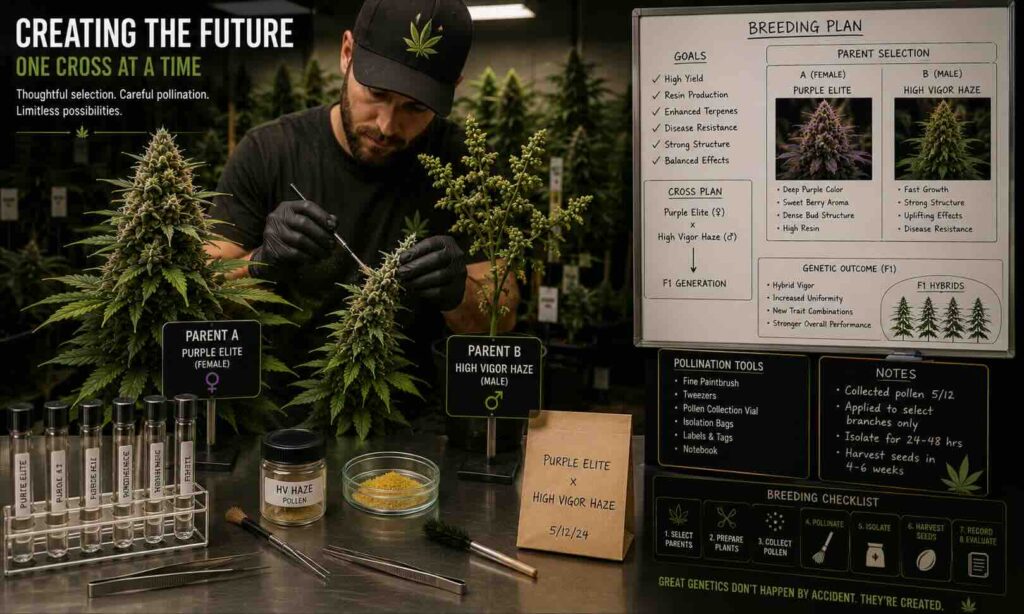
Creating cannabis crosses is one of the most rewarding aspects of working with cannabis genetics. While cultivating existing varieties allows growers to explore the results of previous breeding projects, making original crosses opens the door to entirely new genetic combinations. Through careful planning, observation, and selection, growers can begin developing unique cultivars while gaining a deeper understanding of plant genetics and inheritance.
Successful breeding requires patience and realistic expectations. Most professional cultivars are the result of multiple generations of refinement rather than a single cross. However, understanding the fundamentals of breeding helps growers appreciate the process and build a strong foundation for future projects.
Understanding the Purpose of a Cross
Before making any cross, it is important to define clear objectives. Some breeders want to combine desirable characteristics from two different genetic lines, while others hope to improve stability, vigor, adaptability, or specific plant traits.
Having a clear goal helps guide parent selection and future decisions. Without a defined objective, breeding projects can quickly become difficult to evaluate because there is no clear standard for success.
Careful planning often determines the long-term direction of a breeding project.
Strong breeding programs begin with clear goals rather than random experimentation.
Selecting Parent Plants
The quality of any cross depends heavily on the parent plants involved. Breeders typically evaluate characteristics such as structure, vigor, consistency, environmental adaptability, growth patterns, and overall performance before selecting breeding candidates.
Both parents contribute genetic information to the offspring, making selection one of the most important stages of the process. Choosing plants simply because they are available rarely produces the best results.
Careful evaluation helps improve the likelihood that desirable traits will appear in future generations.
Parent selection remains one of the foundations of successful cannabis breeding.
Making the Cross
Once suitable parent plants have been identified, pollination can be performed. Controlled pollination helps ensure that only the intended genetics contribute to the resulting seed stock.
Many breeders isolate parent plants or carefully manage pollen transfer to maintain accuracy throughout the process. After pollination occurs, seeds begin developing within the fertilized flowers and gradually mature over time.
The resulting seeds represent the first generation of the new cross and provide the material for future evaluation and selection.
Each seed contains a unique combination of genetic information inherited from both parents.
Evaluating the Offspring
Growing the offspring is one of the most important stages in any breeding project. Individual plants may display variation in structure, growth patterns, vigor, and other characteristics. This diversity allows breeders to identify promising individuals for future work.
Detailed observation and record keeping become particularly important during this stage. Photographs, cultivation notes, and performance evaluations help breeders compare plants objectively and make informed decisions.
Growers interested in exploring modern cannabis genetics can learn more through https://www.ministryofcannabis.com/fr/graines-cannabis-feminisees/.
The evaluation phase often reveals opportunities that were not obvious when the project began.
Refining Future Generations
A single cross rarely produces a finished cultivar. Most breeding projects require multiple generations of selection, testing, and refinement before achieving consistent results.
Breeders often select the strongest offspring and continue working with them through additional crosses, stabilization projects, or backcrossing strategies. This gradual refinement helps strengthen desirable characteristics while reducing unwanted variation.
Additional information regarding cannabis cultivation and educational resources can be explored through https://lacremeducbd.fr/blog/guides.
Long-term success in breeding depends on patience, organization, and a willingness to learn from each generation.
Final Thoughts
Creating cannabis crosses is both a science and a creative process. By selecting quality parent plants, performing controlled pollinations, evaluating offspring carefully, and refining future generations, growers can begin developing unique genetics of their own.
While successful breeding requires time and dedication, the experience provides valuable insight into cannabis genetics and the processes that shape modern cultivars. Every breeding project contributes to a deeper understanding of the remarkable diversity found within the cannabis plant.